

Rock excavation in mining includes different types of work. Pneumatic rock drills are used to drill holes, while pneumatic breakers are used to break rock in small areas by hitting the material again and again with a chisel. Both types of equipment may be used at the same mining site, but they have different jobs.
When the rock already has an open surface or cracks, a jackhammer can be used to break certain parts of it. Operators change the point where the chisel hits the rock according to the work location. This helps break the parts that need to be removed into smaller pieces. This type of work may only cover a small area. However, the method used still depends on the condition of the material.
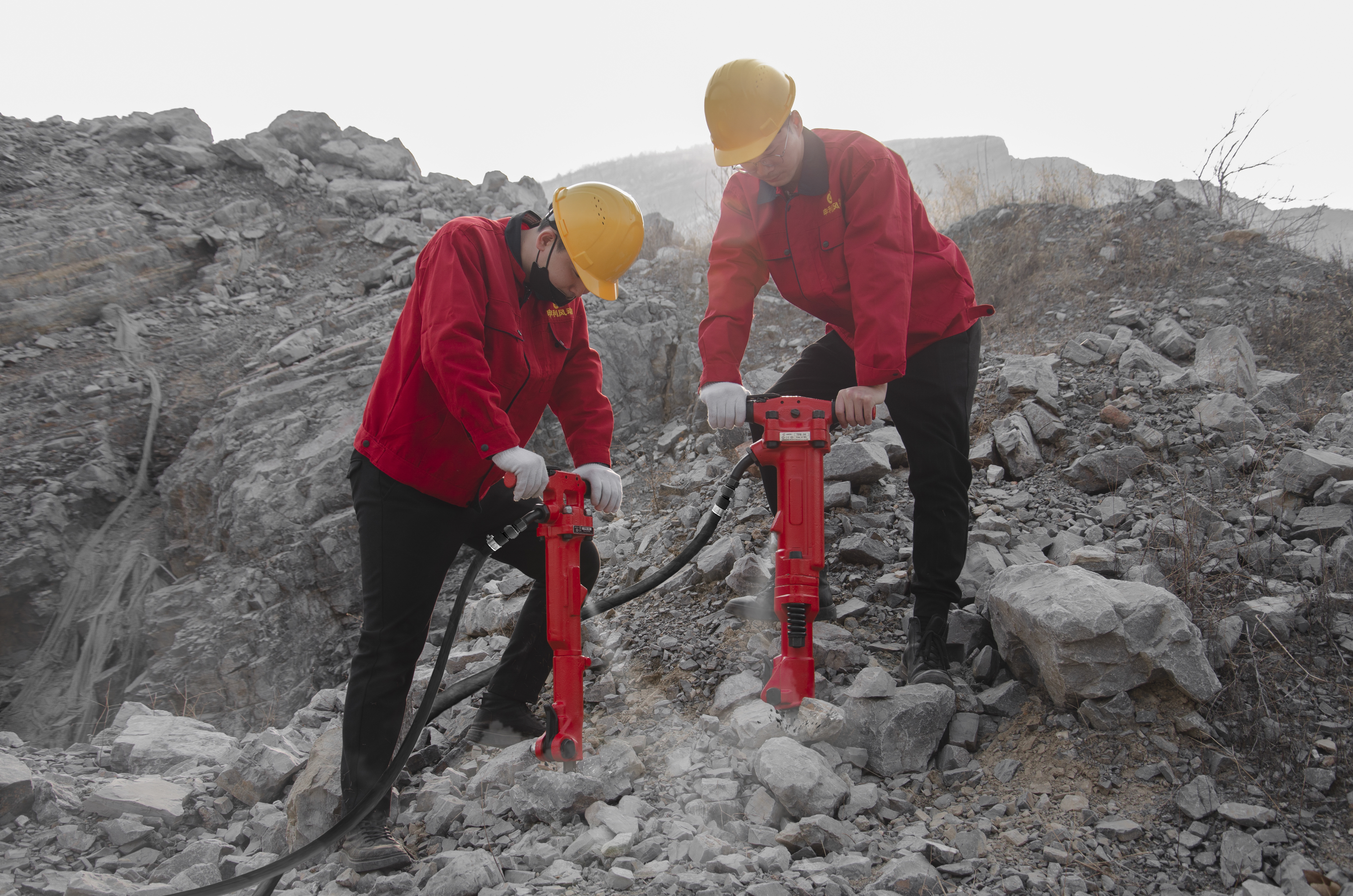
Both machines use impact force, but they produce different results.
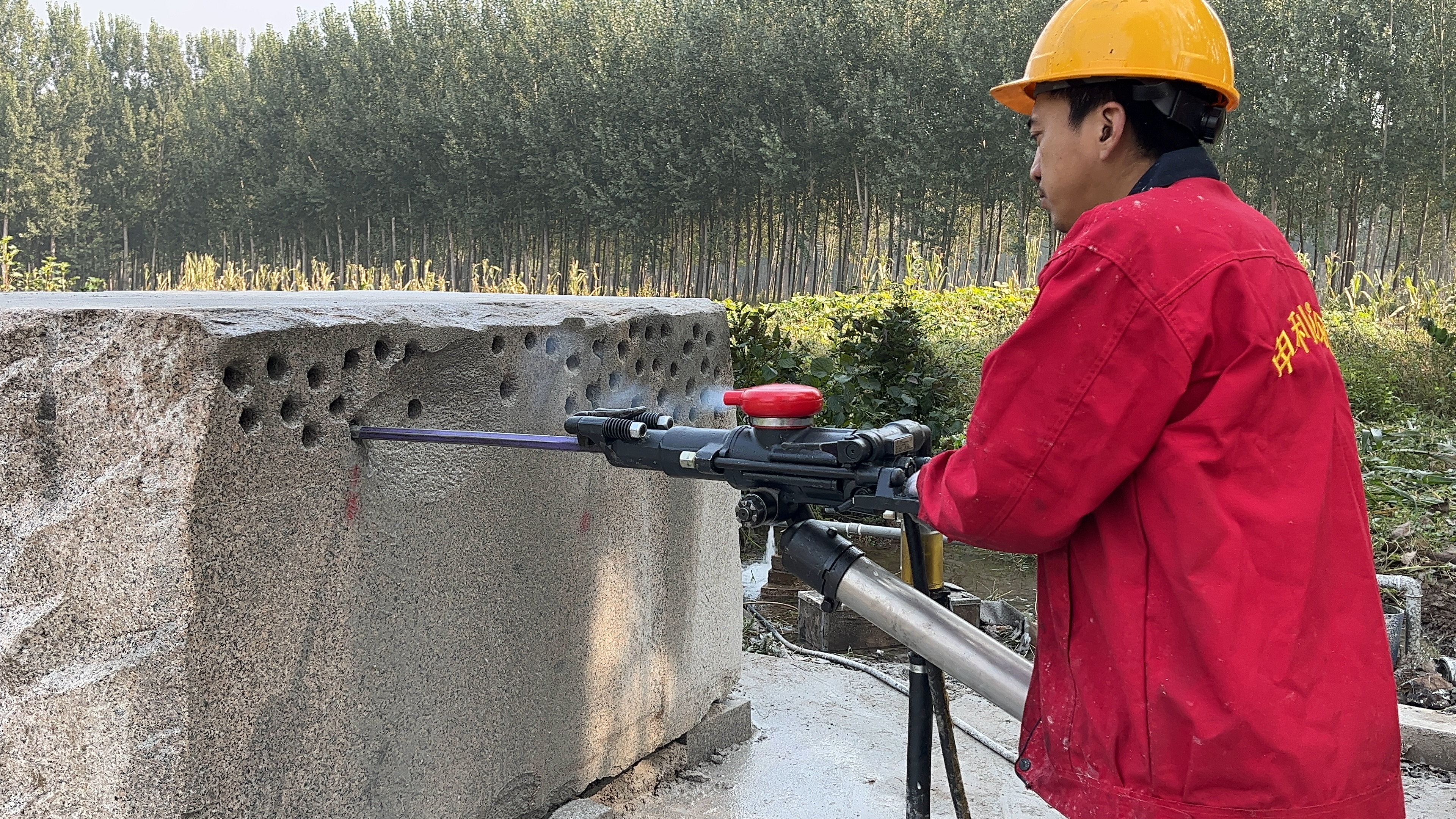
When a pneumatic rock drill drills a hole, the drill bit must keep going into the rock. At the same time, the broken rock pieces must be removed from the hole. A jackhammer works by sending impact force to the rock through the chisel. This causes the material to crack and break. A jackhammer cannot replace a pneumatic rock drill when accurate drilling is needed. The drilling speed of a pneumatic rock drill also cannot be used to measure how much rock a jackhammer can break.
This difference also affects how we show the equipment during a test. When testing a jackhammer, we should show how the material breaks. If the video only shows the machine starting, we can only know that the machine is running. We cannot see how it actually works.
|
SPECIFICATIONS for YT series pneumatic rock drilling machine with air leg
|
|||||
| Model | YT28 | YT27 | YT29A | TY24C | YT24 |
| Weight | 26kgs | 27kgs | 26.5kgs | 27kgs | 24kgs |
| Length | 661mm | 668mm | 659mm | 610mm | 678mm |
| Air pressure | 0.63Mpa | 0.63Mpa | 0.63Mpa | 0.63Mpa | 0.63Mpa |
| Percussive Frequency | ≧37HZ | ≧36.7HZ | ≧37HZ | ≧28HZ | ≧31HZ |
| Air consumption | ≦81L/s | ≦80L/s | ≦65L/s | ≦2.7m³min | ≦66.7L/s |
| Piston Diameter | 80mm | 80mm | 82mm | 67.7mm | 70mm |
| Piston Stroke | 60mm | 60mm | 60mm | 68mm | 70mm |
| Air Leg Model | FT-160BC | FT160A | FT160A | FT140BC | |
| Shank dimension | 22*108mm | 22*108mm | 22*108mm | 22*108mm | 22*108mm |
| Drilling depth | 6m | 6m | 6m | 6m | 6m |
| Bit diameter | 34-42mm | 34-45mm | 34-45mm | 34-45mm | 34-45mm |
| Parameter/name | tca-7 | tcd-20 | rb777 | tpb-40 | tpb-60 | tpb-90 |
| Piston diameter | 35mm | 42.85 | 57mm | 44mm | 57.15mm | 66.67mm |
| Piston stroke | 120mm | 60mm | 189mm | 146mm | 100mm | 152mm |
| Percussive frequency | 1250 B.P.M | 2000 B.P.M | 18.3 Hz | 1050 B.P.M | 1400 B.P.M | 1400 B.P.M |
| N.W | 7.2kg | 10kg | 37kg | 18kg | 30kg | 42kg |
| Length | 465MM | 520MM | 733MM | 660MM | 645MM | 723MM |
| Air consumption | 1.0m³/min | 1.1 m³/min | 0.63Mpa | 1.6 m³/min | 2.0 m³/min | 2.2 m³/min |
| Tracheal diameter | 19 | 19 | 19 | 19 | 19 | 19 |
| bit head size | R26*80 | R26*80 | R32*152 | R25*108 | R32*152 | R32*152 |
The Condition of the Material Affects Crushing Performance
The crushing process may be very different for a solid rock block and a rock block that already has cracks. Whether the material has support can also affect the results. Therefore, when talking about the crushing performance of a jackhammer, we need to explain the condition of the material.
If the test uses an ordinary rock, we should describe it as an ordinary rock. If we do not know the exact rock type, we should not call it granite or very hard ore. Also, breaking one piece of rock quickly does not mean the jackhammer can break the same amount of rock every hour at a mine.
In actual work, the point where the chisel touches the rock also matters. Breaking rock along existing cracks may give different results from hitting a solid rock surface. We need to consider these differences when comparing the performance of different machines.
How Factory Tests Relate to Field Applications
SHENLI manufactures pneumatic rock drills and pneumatic breakers. Tests for these two types of equipment should clearly show their different jobs. If both tests only show similar videos of machines hitting rock, people may not understand what each machine is used for.
For a jackhammer, showing the full process of breaking rock in a small area can help people understand what the machine does. We can first record what the material looks like before the test. Then we can show how it changes after being hit by the chisel. This helps people understand the test results and the conditions in which these results can be used.
Factory tests and actual mining work may have different conditions. The size and position of the rocks used in factory tests may be different from those at real mining sites. Therefore, test records should clearly explain the conditions during the test. We cannot use the results of one factory test to describe how the machine will work under all conditions.
The role of jackhammers in mining operations needs to be explained based on the actual work. We need to describe where the work takes place and what condition the material is in. With this information, industry reports can show how the equipment is used in real work, instead of only showing videos of machines running.
Post time: Nov-25-2026
